An undergraduate-centered research lab at the University of Dallas exploring strain-driven reactivity, organoboron methodology, and the frontiers of synthetic organic chemistry.
The Dannatt Research Lab is an inclusive, undergraduate-centered synthetic organic chemistry group at the University of Dallas. We pursue genuine scientific discovery, not predetermined outcomes, using organoboron and aryne chemistry as vehicles for rigorous scientific training.
Our current research explores how the inherent strain of arynes can be harnessed to activate strong bonds, such as the boron-oxygen bond, opening new pathways in synthetic methodology. Students who join the lab engage in the complete scientific process: from background reading and experimental design to data collection, manuscript preparation, and external presentations. This training prepares students for graduate school, medical school, and careers in science and industry.
Our research centers on reaction discovery in organic chemistry, with a focus on strained intermediates, organoboron transformations, and training undergraduates through genuine laboratory research experiences.
Arynes are strained aromatic intermediates capable of inserting into polarized sigma bonds. We are exploring their previously unstudied reactivity with boron-heteroatom bonds (B-O, B-Cl, B-N), using bench-stable iodonium salt precursors that make this chemistry accessible to undergraduate researchers.
Despite the ubiquity of organoboron compounds in synthesis and drug design, the Hammett sigma values for common boryl substituents have never been measured. We are determining these fundamental parameters for B(OH)₂, Bpin, Bcat, BF₃K, and others through potentiometric and UV-vis titration, complemented by DFT calculations with Dr. Prajay Patel.
Our NSF-supported Course-Based Undergraduate Research Experience (CURE) embeds genuine discovery science into the Organic II lab. Students have developed a DCM-free reductive amination, replacing a probable carcinogen with 2-MeTHF. Every student generates original data, designs experiments, and contributes to a growing substrate scope dataset with publication potential.
With Dr. William Cody (Biology, UD), we develop the extraction and GCMS methods needed to quantify hydrocarbon degradation by Pseudomonas aeruginosa mutants. This analytical infrastructure is essential to mapping the genes that regulate jet fuel breakdown, with applications to environmental remediation at contaminated airfields.
In collaboration with Dr. Prajay Patel, we combine DFT calculations and machine learning to predict molecular properties. Current work trains models on Hirshfeld atomic charges and ¹³C NMR chemical shifts to predict Hammett substituent constants, with the MLP model achieving R² = 0.90 on para-substituted datasets.
With Dr. Inimary Toby (Biology, UD), we use GCMS to characterize commercial e-cigarette liquids: comparing labeled vs. actual nicotine concentrations, identifying undisclosed flavor compounds, and measuring how these chemical profiles change after heat exposure at temperatures reachable inside a parked car in summer.
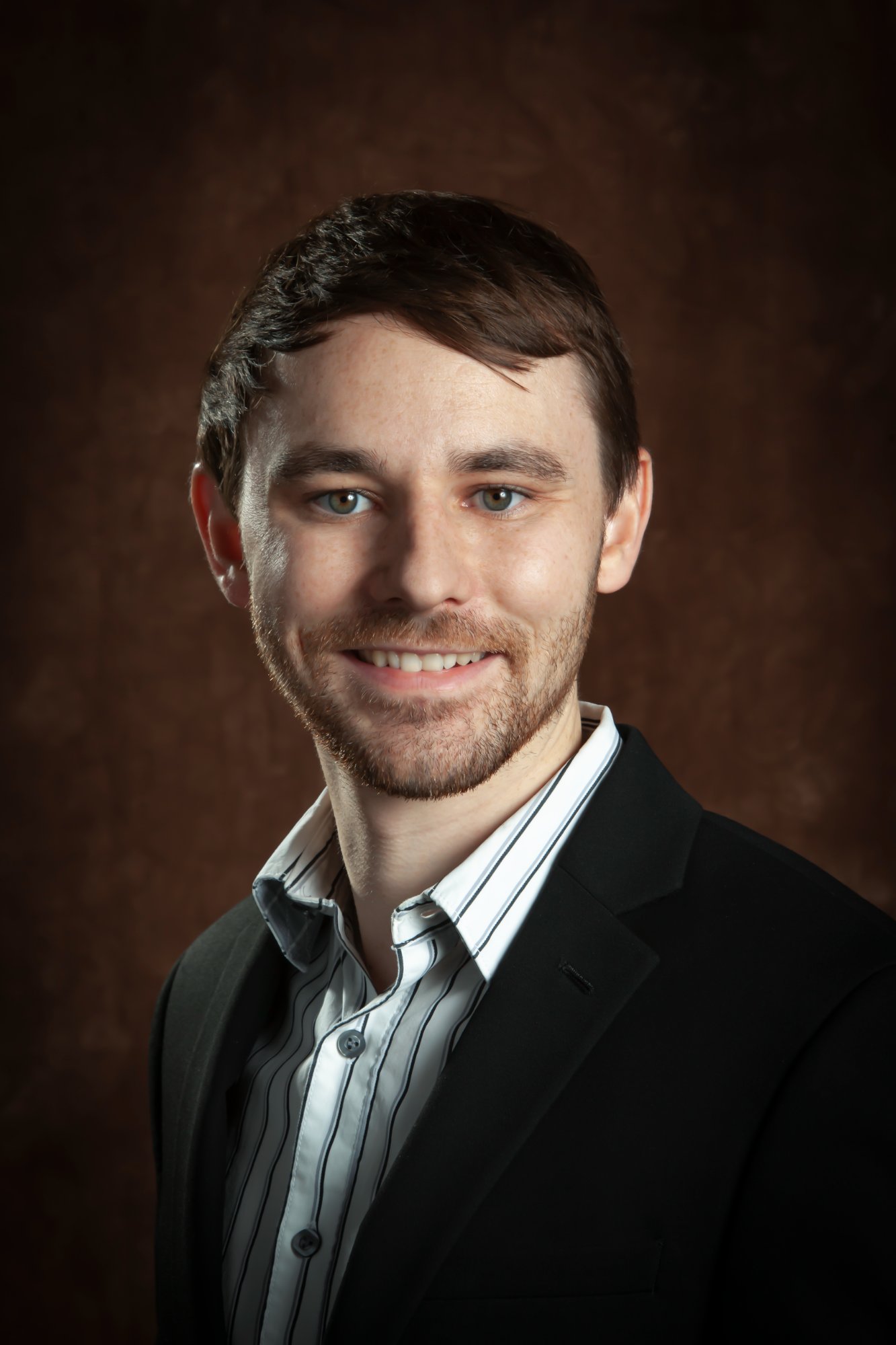
Dr. Dannatt completed his undergraduate education in chemistry and mathematics at Lyon College, where transformative research experiences — including an NSF REU at Georgetown University — set the course for his scientific career. He earned his Ph.D. from Michigan State University in 2019 under Professor Robert Maleczka, studying iridium-catalyzed C–H activation borylation catalysts and silsesquioxane synthesis.
He joined the University of Dallas faculty in August 2019, where he teaches the organic chemistry sequence. Inspired by the impact his own undergraduate research had on his trajectory, Dr. Dannatt is committed to providing equally transformative opportunities to UD students — and to building a lab culture that is rigorous, inclusive, and discovery-focused.
Dannatt Lab students and faculty regularly present at national, regional, and local venues, earning top honors at ACS meetings, the American Society of Microbiology, and the Texas State Capitol.
The Dannatt Lab actively welcomes undergraduate researchers at all levels. No prior laboratory research experience is required. We train from the ground up. What we look for is curiosity, commitment, and a willingness to embrace the unknown.
Students who join the lab gain hands-on experience with modern organic techniques including NMR spectroscopy, column chromatography, air-free synthesis, and reaction monitoring. You'll contribute to ongoing projects, attend group meetings, and have the opportunity to present your work at regional and national conferences.
"Whether your goals are graduate school, medical school, law, or industry, research training will set you apart."